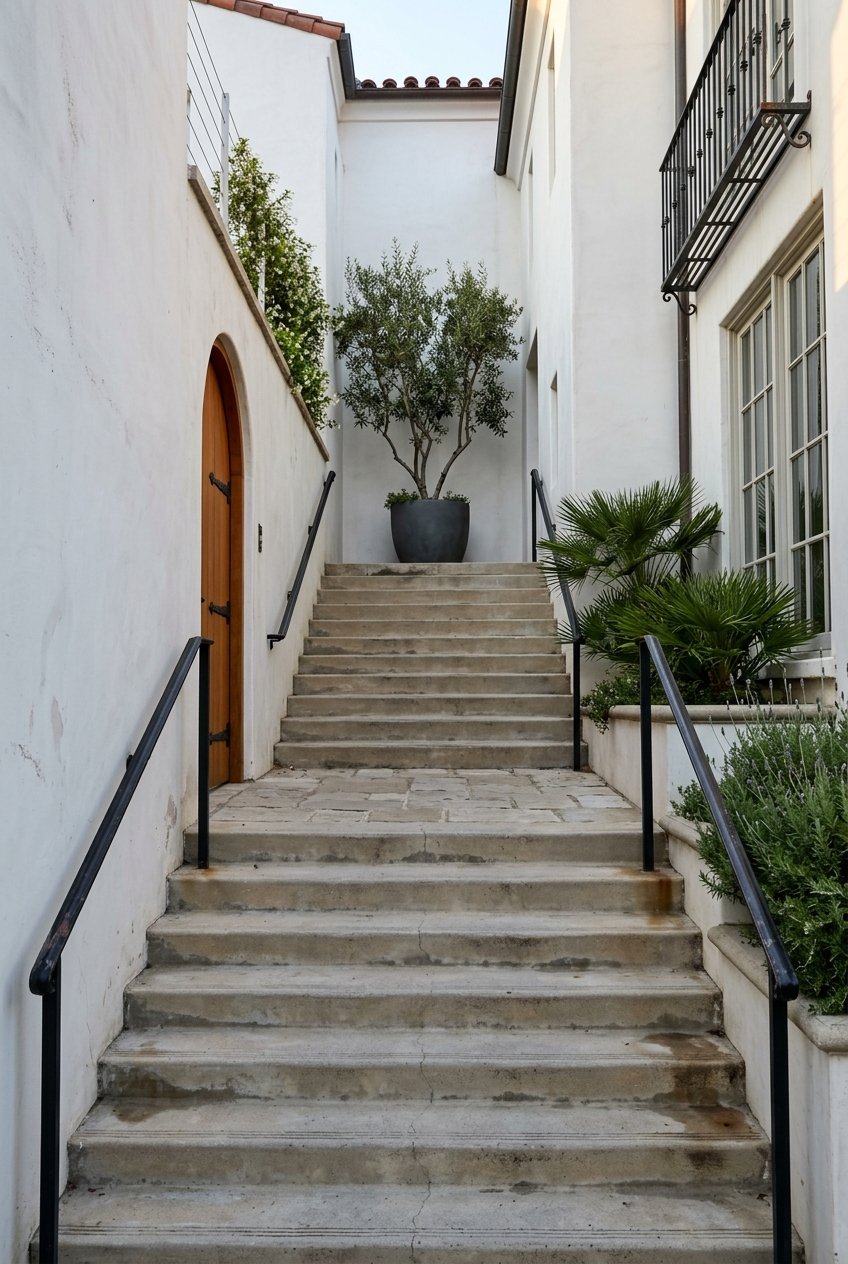
If you only know Russian Hill by its postcard views, you are missing the part that residents feel every day. This neighborhood is shaped as much by stairways, garden paths, and short walking lanes as it is by its famous skyline moments. When you spend time here on foot, you start to see how daily life unfolds through climbs, pauses, errands, and small scenic detours. Let’s take a closer look.
Why Russian Hill Feels Walkable
Russian Hill’s steep terrain does more than create views. According to San Francisco Planning, the neighborhood’s identity is tied to its hill form, older small-scale buildings, retaining walls, landscaping, and small open spaces that work together to shape the public experience.
That physical design helps explain why the neighborhood is so often experienced on foot. Russian Hill Neighbors describes the stairways and walking lanes as pedestrian-only spaces cared for by nearby residents, created for neighbors and visitors moving through the hill at a slower pace.
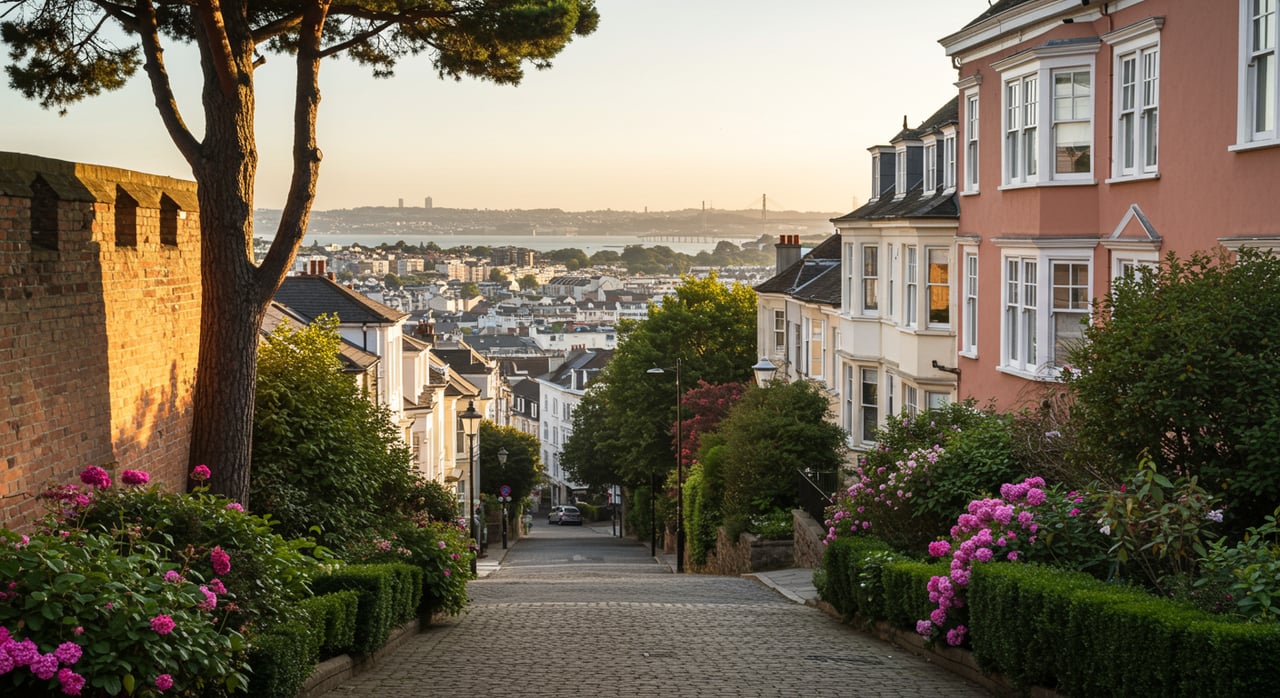
There is also a visual rhythm to the area that rewards walking. The neighborhood association notes that hillside homes are often best appreciated from across the street or a few blocks away, where the layers of architecture, gardens, and slope come into view.
Stairways That Shape Daily Life
The hidden stairways of Russian Hill are not just scenic extras. They are part of how people move through the neighborhood, linking blocks, opening unexpected views, and turning an ordinary outing into something more memorable.
Chestnut Street Stairway Garden
Beginning at Chestnut and Larkin, this stairway winds through Monterey and Canary Island pines and reconnects you toward Chestnut Street and Polk. A detour onto Culebra Terrace adds another climb that leads toward Lombard Street.
It is a good example of how Russian Hill compresses nature, architecture, and movement into a small footprint. What looks like a simple route on a map can feel like a quiet garden walk between errands.
Green Street Stairway Garden
Near Green and Jones, the Green Street Stairway Garden runs with houses on one side and condominiums on the other. That mix says a lot about Russian Hill itself, where housing types and architectural styles often sit side by side on the same slope.
For residents, paths like this can become part of a repeated routine. A short uphill or downhill walk here feels less like a commute and more like a neighborhood ritual.
Greenwich Garden Path
At Hyde and Greenwich, this path begins beside a rose garden created by a resident. That detail captures something important about Russian Hill. Many of its most appealing spaces feel personal and cared for, even when they are part of the public realm.
You see that throughout the neighborhood. The hill often feels composed, not in a formal way, but through the accumulation of small acts of maintenance, planting, and attention.
Havens Place and Macondray Lane
Havens Place, off Leavenworth north of Union, is described by Russian Hill Neighbors as a hidden treasure. It is steep, quiet, and easy to miss unless you know to look for it.
Macondray Lane is better known, but it still feels tucked away. Running mid-block east of Leavenworth, crossing Jones, and descending to Taylor by wooden stairway, it offers one of the clearest examples of Russian Hill’s layered pedestrian network.
Vallejo Stairway Garden
The Vallejo Stairway Garden zig-zags from Vallejo to Taylor past historic buildings on the eastern slope. Russian Hill Neighbors also notes that wild parrots often appear around the eastern stairways, adding another distinctive detail to the walk.
This route brings together several of the neighborhood’s defining traits at once. You get elevation, architecture, planting, and a sense that the city is revealing itself gradually rather than all at once.
Parks and Overlooks Along the Way
One reason Russian Hill’s climbs feel manageable is that the neighborhood offers places to stop. Pocket parks, terraces, and overlooks break up the terrain and give daily walks a natural cadence.
Francisco Park
Francisco Park opened in April 2022 on the former reservoir site and spans 4.5 acres. It includes ADA-accessible pathways, a playground, a fenced dog run, a community garden, restrooms, a rainwater catchment system, and views of the Bay, Alcatraz, the Golden Gate Bridge, and the Palace of Fine Arts.
For everyday use, that mix matters. It is not only a scenic destination, but also a practical neighborhood amenity where residents can walk, meet, pause, or continue on through the hill.
Ina Coolbrith Park and Fay Park
Ina Coolbrith Park sits on the eastern slope and combines winding staircases, lush greenery, Bay Bridge views, and a Poet’s Corner bench. It feels intimate and elevated at the same time, with a layout that reflects the hillside rather than fighting it.
Fay Park, at Leavenworth and Chestnut, offers another kind of pause point. This quarter-acre terrace garden includes stairs and ramps, twin gazebos, a 1911 house, and Bay views, with landscape design by Thomas Church.
Everyday Recreation Spaces
Russian Hill also benefits from nearby spaces built for daily use. Michelangelo Playground includes a playground, basketball court, community garden, grassy area, and restrooms, while Alice Marble Courts and George Sterling Park add tennis, basketball, walking paths, benches, and bridge views.
These spaces broaden the story of the neighborhood. Russian Hill is visually dramatic, but it is also functional, with recreation and open space woven into its steep geography.
Polk Street and Daily Errands
For all its hidden paths and overlooks, Russian Hill is not cut off from daily convenience. Polk Street serves as the neighborhood’s most useful mixed-use corridor for quick errands, coffee runs, casual meals, and repeat visits to local businesses.
San Francisco Travel describes Polk Street as a bustling corridor stretching through Russian Hill, Nob Hill, and the Tenderloin, with the Russian Hill end feeling more polished and cozy. That description fits the lived experience of the area, where the commercial streets soften the hill’s dramatic setting with practical routines.
Russian Hill Neighbors highlights a local mix that includes Saint Frank Coffee, The Fueling Station, Bi-Rite Market, Cheese Plus, LeBeau Market, Polk Street Grocer, Swensen’s, William Cross Wine Merchants, Collina, Frascati, The New Spot on Polk, and Russian Hill Bookstore. Together, they help ground the neighborhood in everyday use rather than occasional sightseeing.
That daily-use quality shows up in community habits too. Russian Hill Neighbors notes that neighborhood clean-up events meet at Filbert and Hyde over coffee and Bob’s Donuts before heading out, a simple reminder that social life here often starts with familiar places and repeat routines.
Architecture That Rewards Slow Looking
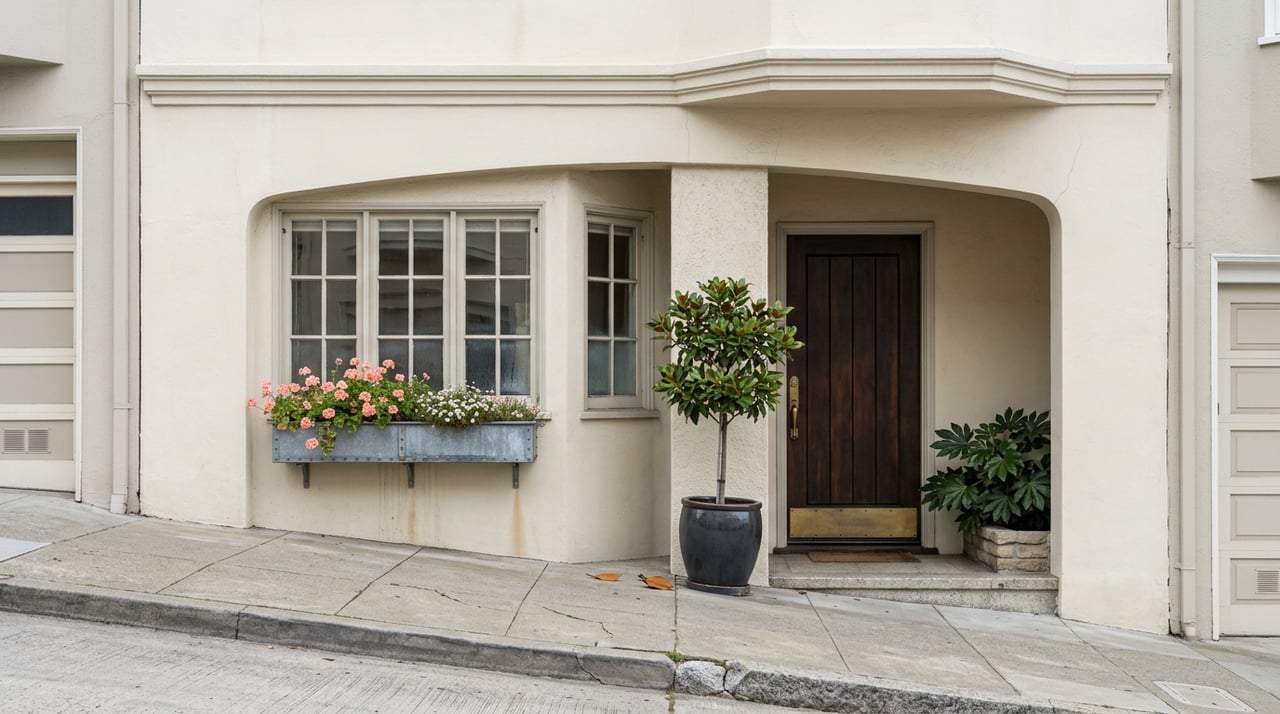
Russian Hill’s stairways make you notice its buildings differently. Because the neighborhood is so often seen from angles, across grades, and from half-hidden paths, architecture reveals itself in layers.
San Francisco Planning describes the area as a balance of small-scale older buildings, tall slender towers, detailed retaining walls, and landscaping that cascades down the slopes. That combination gives the hill a textured, almost theatrical quality, but in a way that still feels residential and grounded.
Russian Hill Neighbors points to a broad architectural mix that includes Italianate, shingle-style, Mission Revival, Spanish Colonial Revival, Beaux Arts, and Bay Area Tradition buildings. Names like Willis Polk and Julia Morgan appear throughout that architectural story, reinforcing the depth and range of the neighborhood’s built environment.
The historic texture is especially visible around the summit. The Vallejo Street Crest Historic District was listed on the National Register in 1988, and Russian Hill Neighbors uses it as the anchor for its summit walk.
There are also singular details that deepen the sense of place. Russian Hill Neighbors identifies the Atkinson House at 1032 Broadway, built in 1853, as the neighborhood’s oldest house.
Landscape design adds another layer. Fay Park and several private gardens reflect the influence of Thomas Church, which helps explain why parts of Russian Hill feel planted and intimate, not simply dense.
The Real Rhythm of the Neighborhood
What defines everyday life on Russian Hill is not one landmark or one famous block. It is the sequence of movement: a stairway climb, a small overlook, a stop for coffee, a practical errand on Polk, and a quieter route home.
That rhythm gives the neighborhood a distinct kind of livability. Even in a dense part of San Francisco, Russian Hill makes room for pauses, visual variety, and pedestrian routes that feel both useful and memorable.
For buyers considering the neighborhood, that is part of the appeal. Russian Hill offers not just beautiful homes and striking views, but also a daily experience shaped by texture, access, and a strong sense of place.
If you are exploring Russian Hill as your next move, local insight matters. The Warrin Team brings a discreet, highly personalized approach to San Francisco real estate, with a refined understanding of the neighborhood’s homes, architecture, and lifestyle. To start a private conversation, connect with The Warrin Team.
FAQs
What makes Russian Hill stairways part of everyday life?
- Russian Hill’s stairways and lanes connect blocks, parks, and commercial streets, making them part of how residents move through the neighborhood on foot.
Which Russian Hill stairways are best known?
- Notable routes in Russian Hill include the Chestnut Street Stairway Garden, Green Street Stairway Garden, Greenwich Garden Path, Havens Place, Macondray Lane, and the Vallejo Stairway Garden.
What parks support daily life in Russian Hill?
- Francisco Park, Ina Coolbrith Park, Fay Park, Michelangelo Playground, Alice Marble Courts, George Sterling Park, and Russian Hill Open Space all contribute to everyday recreation and scenic pauses in the neighborhood.
Where do Russian Hill residents run errands?
- Polk Street is the main mixed-use corridor for day-to-day errands, with local coffee shops, grocers, restaurants, wine merchants, and a bookstore serving the neighborhood.
What is distinctive about Russian Hill architecture?
- Russian Hill combines small-scale older buildings, historic homes, retaining walls, gardens, and a range of architectural styles, including Italianate, Mission Revival, Spanish Colonial Revival, Beaux Arts, and Bay Area Tradition.
Why does Russian Hill feel different on foot?
- Walking reveals the neighborhood’s layered views, garden paths, hillside architecture, and small public spaces in a way that is hard to experience from a car or a single viewpoint.